What Does A Good IRR Look Like?
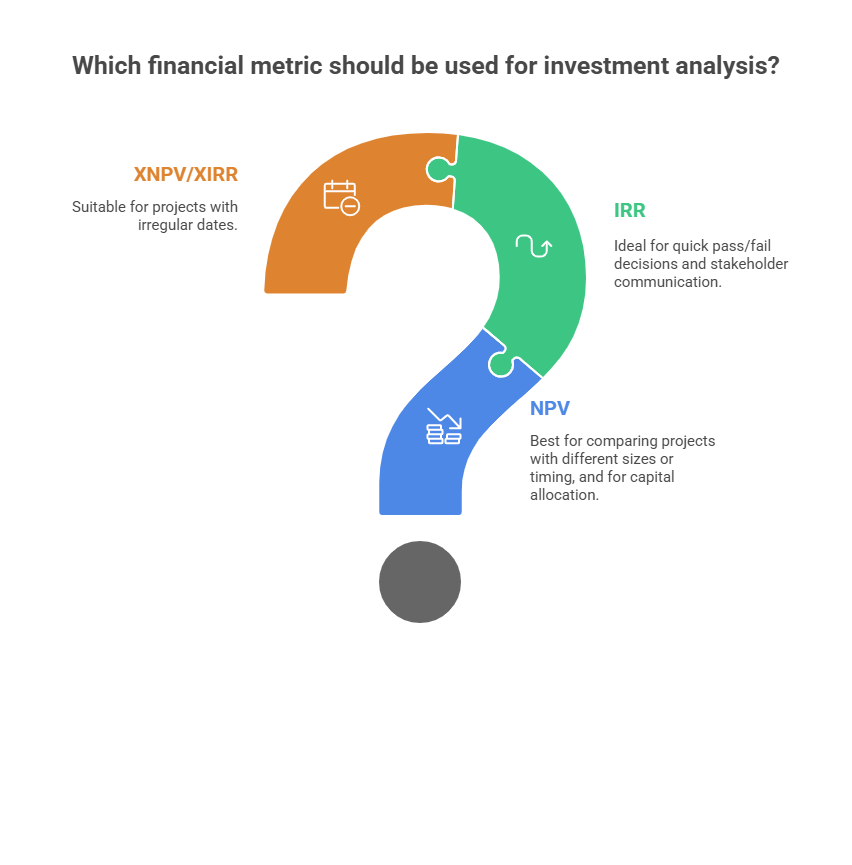
If you are analyzing a new property or acquisition, one of the most important metrics that you should be utilizing is internal rate of return (IRR). IRR is the discount rate at which net present value of an investment is equal to zero. The net present value is the lump-sum value today of a string of future cash flows discounted back to today at a specified discount rate.
Essentially, the IRR metric is a time value of money metric representing the true annual rate of earnings on an investment. It will provide you with an annualized rate of return by taking into account your net operating income, capital expenses, and loan metrics. It is important to understand that there are two different metrics of IRR.
Levered Internal Rate of Return
Levered IRR takes into consideration your debt services on the purchase, sale, and the string of cash flow after debt services. When using levered IRR, it is common that you will see a higher return because you are leveraging your cash flow against the debt.
Unleveraged Internal Rate of Return
Unleveraged IRR only takes into account net operating income and capital expenses. It does not consider debt financing or debt services. When you are not factoring in financing, it is common for unleveraged IRR to show a lower return. This is because when you take financing into account, you are not calculating off the full purchase price but rather based off the amount of money that you put into the deal.
Example
In this example, you purchase a property for $4,000,000 with 30% down. You plan to hold the property for 4 years. Each of those 4 years you make a net operating income of $300,000. Your debt services for each year are $170,000. At the end of the 4th year, we expect we can sell the property for $4,475,000 after closing costs. We will have a remaining loan amount of $2,606,000.
What is our levered and unlevered IRR?
After calculation, you can see that the leveraged IRR is much higher than the unlevered. This is because in reality, you are not putting the full $4,000,000 of your own cash into the property but only covering 25% of the investment cost with your own equity. You may be receiving a discounted cash flow due to paying your debt services, but relative to the amount of money that you put into the investment, you are receiving higher returns than if you purchased the property outright. This is the power of leveraging debt.
What Makes a Good IRR?
Now that we know how to properly calculate IRR, what makes a good rate of return? It depends on two key factors:
1. Risk Assessment
The higher the risk of the acquisition, the higher the returns you should expect to receive. The lower the risk, the lower the returns you should expect.
2. Timing
If you are planning on a long-time hold, you should expect a lower IRR. Likewise, the shorter the hold period, the higher the IRR you should expect. It is important to understand that the sooner you receive the cash flow over the hold period, the higher your IRR will become.
Preferred Ranges
Depending on how long you plan on holding the property and the level of risk involved:
- Levered IRR: 7–20%
- Unlevered IRR: 6–11%
Ultimately, it depends on you as an investor — what type of return you are satisfied with and the level of risk you are willing to take to achieve higher returns.
Calculate IRR Automatically
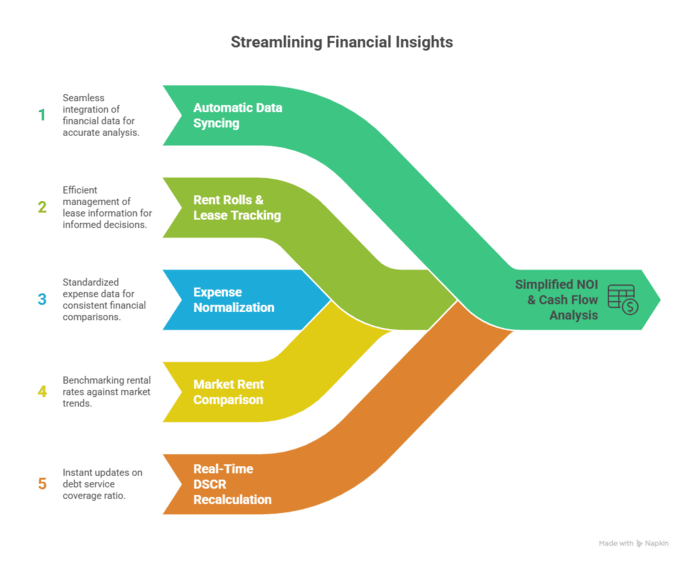
Running IRR calculations by hand is tedious and error-prone. Tools like Solsten calculate both levered and unlevered IRR automatically from your property’s rent roll, expenses, and financing — giving you instant clarity on whether a deal meets your return threshold.
FAQs
What is a good levered IRR for commercial real estate? 7–20% depending on risk and hold period. Lower-risk stabilized assets typically target 7–12%, while value-add and development deals target 15–20%+. Always cross-reference with NPV and cash-on-cash return for the full picture.
What’s the difference between levered and unlevered IRR? Levered IRR includes the effects of debt financing — your loan payments reduce cash flow but also reduce equity invested, typically producing a higher percentage return. Unlevered IRR excludes financing and shows the property’s raw return on total cost.
Can IRR be misleading? Yes. IRR favors shorter hold periods and early cash flows, which can make a small, fast deal look better than a larger, steadier investment. IRR also assumes interim cash reinvests at the IRR rate itself, which is often unrealistic. Use NPV alongside IRR to avoid these traps.
How does IRR relate to cap rate? Cap rate is a point-in-time, unlevered yield metric. IRR captures the full time value of money across your entire hold period, including cash flows, debt service, and the sale. Cap rate is a quick filter; IRR is the definitive return measurement.
Related Articles
- Waterfall Distributions Explained — How IRR hurdles drive investor payouts in equity waterfalls
- Preferred Return Explained — The return threshold LPs earn before promote splits
- Mastering IRR and NPV — The complete guide with formulas, MIRR, WACC, and worked examples
- Cash-on-Cash Return Explained — The cash yield metric that complements IRR
- Cap Rates: Do They Really Matter? — Why this popular metric needs context
Explore Solsten
- DCF Analysis Software — Calculate IRR, NPV, and terminal value with exit scenario optimization
- CRE Proforma Software — Full operating statements with leveraged and unleveraged returns
- All Features — See everything Solsten offers for CRE analysis
Try Solsten Free
See everything we discussed in action — no credit card required.
Start Your Free AnalysisRelated Articles

What Is Cash-On-Cash Return? Formula, Example, and Benchmark
Cash-on-cash return is annual pre-tax cash flow divided by total cash invested. This guide walks through the formula, a step-by-step CRE example, and what counts as a good benchmark.
Cap Rates, Do They Really Matter?
Cap rates are the most used metric in CRE — but relying on them alone is dangerous. Learn what cap rates miss and which metrics give you the full picture.
Stress-Testing a CRE Deal: The Sensitivity Analysis Guide for Underwriters
How to stress-test commercial real estate underwriting assumptions — exit cap rate, rent growth, expense inflation, DSCR at breakeven. Complete guide with worked examples and common mistakes.