Load-Bearing Math: Where AI Belongs in CRE — and Where It Doesn't

This year, an unknown number of multi-million dollar CRE deals closed using numbers an AI made up. The frightening part: nobody can tell you how many.
Nobody at the table knew. The number looked right. The narrative was clean. The LP memo read well. The deal got funded.
Six months from now, when actuals come in and variance shows up in a quarterly report, somebody is going to ask:
“Where did the year-1 NOI assumption come from?”
And the honest answer will be:
“A prompt. We don’t have it anymore. We can’t reproduce it.”
That’s the part of the AI-in-CRE conversation almost nobody is having.
Prompts Are Not Load-Bearing Math
Prompts are brilliant for thinking, drafting, summarizing, comparing, and exploring. I use them every day. So does every smart broker, analyst, and operator I know.
But the moment a number leaves the chat window and lands in a model that prices a deal, secures debt, or sets an LP distribution — you needed engineered software, not a generated paragraph.
There is a clean line between the work AI is built for and the work that has to stand up in front of a lender, an LP, or an auditor. Most of the industry hasn’t drawn that line yet. Until it does, expensive mistakes will keep getting funded.
Three Things Load-Bearing Math Has That an LLM Never Will
1. It Runs the Same Way Twice
Same inputs → same IRR. Forever.
A lender, an LP, or an auditor can re-run the model next year and get the exact same answer. Engineered software is reproducible by design. A prompt can’t promise that — even with the same input, the same model, and the same day, you can get different outputs depending on temperature, system state, or a quiet model update from the vendor.
In commercial real estate, “approximately the same answer” isn’t an answer. It’s a liability.
2. It Shows Its Work
Every dollar in a proforma should trace back to an input you can point at on the screen.
In engineered software, NOI is a function of revenue minus expenses, where revenue ties back to a specific tenant’s lease and expenses tie back to specific recurring line items. You can click any number and walk it back to the source. That’s how an audit trail is supposed to work.
In an LLM, you cannot. The number is the output of a hidden token stream. The model can write you a justification after the fact, but the justification is itself generated. There’s no underlying calculation to inspect. There’s only language.
3. It Fails Loud, Not Silent
A bug in engineered software throws an error. The screen lights up. The build breaks. The unit test fails. You know.
A hallucination in an LLM throws a confident sentence — with conviction. Often a beautifully written one. The model has no internal signal that says “I made this up.” It just keeps going.
In CRE, the cost of a silent failure is measured in seven figures.
I’m Not Anti-AI. I’m Anti-Trusting It With Work It Isn’t Built For.
Here’s the part most people miss.
Every LLM has a finite memory window. To stay inside that window, the model compresses earlier context into summaries. Those summaries silently strip detail. Strip enough detail and the model fills the gap with whatever sounds plausible.
That’s not a bug. That’s how it works.
When you load an OM, a rent roll, a T-12, three years of operating statements, and a market report into an AI session — and then ask it to underwrite — you are asking a system that just compressed half its context to give you a number that prices the deal.
Are you willing to bet $30 million on a summary?
Where AI Belongs
Front-end work — research, summarization, comp narratives, OM drafts, market color, pattern recognition.
This is where AI is genuinely transformational. It compresses hours of reading into minutes. It catches patterns a human would miss. It drafts the ninety percent of language that doesn’t need to be original. Use it. Use it aggressively.
Back-end work — underwriting, debt sizing, refinance scenarios, waterfall distributions, actuals vs projected reporting.
This is where engineered software has to live. The numbers your investors and your bank will sue you over need to be reproducible, traceable, and auditable. Not generated.
The firms that win the next decade won’t be the ones with the cleverest prompt library. They’ll be the ones who put AI where it belongs and keep the load-bearing math under engineered software.
Why I Built Solsten
I spent two years building that engineered layer — solo, from scratch — for the kind of deals I used to underwrite at Tomco.
Because I lived the silent-Excel-error problem. I watched a 90-year-old commercial real estate veteran spend forty years teaching the same lesson: the math is the asset. Get the math wrong and nothing else you do — the relationships, the brokerage skill, the market timing — saves the deal.
Solsten is what happens when you take that lesson seriously and build software around it. Every number traces back to a source. Every projection is reproducible. Every assumption is auditable. The AI layer is there for context, research, and pattern recognition — not for the load-bearing math.
If you’re using AI on your underwriting and you can’t answer “where did this number come from” in one click — that’s the conversation I’d love to have.
— Eric
Eric Davis is the founder of Nordic Real Estate Services and the builder of Solsten. He spent two years as a commercial real estate acquisitions analyst at Tomco Properties under Jerry Tomlinson, a 40+ year CRE veteran, before teaching himself to code and building Solsten from the ground up.
Try Solsten Free
See everything we discussed in action — no credit card required.
Start Your Free AnalysisRelated Articles
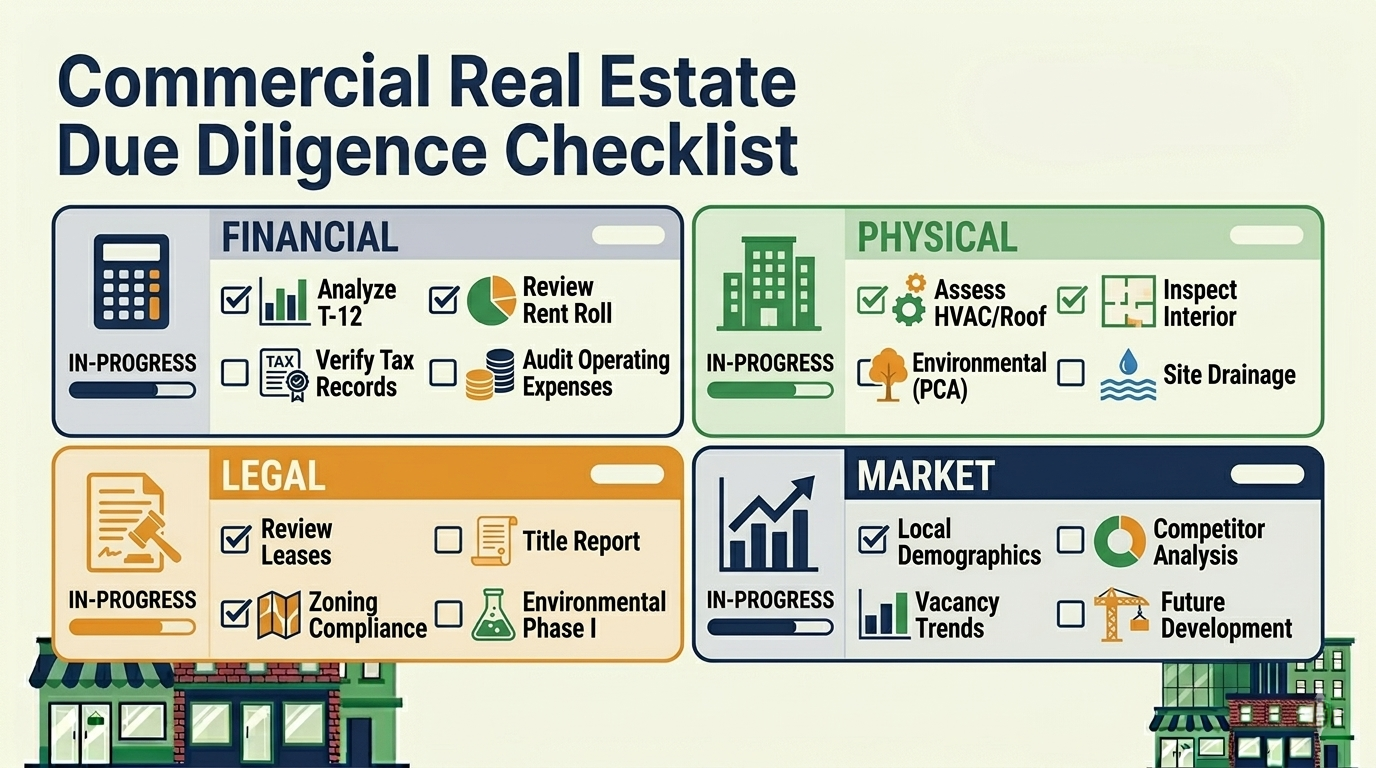
Commercial Real Estate Due Diligence Checklist: What to Verify Before Closing
Complete CRE due diligence checklist covering financial, physical, legal, environmental, and market verification — what to request, what to analyze, and what kills deals.

How to Calculate Operating Expenses for Commercial Real Estate
A complete guide to CRE operating expenses — categories, fixed vs. variable, below-the-line items, and how expense modeling affects your NOI, DSCR, and investment returns.
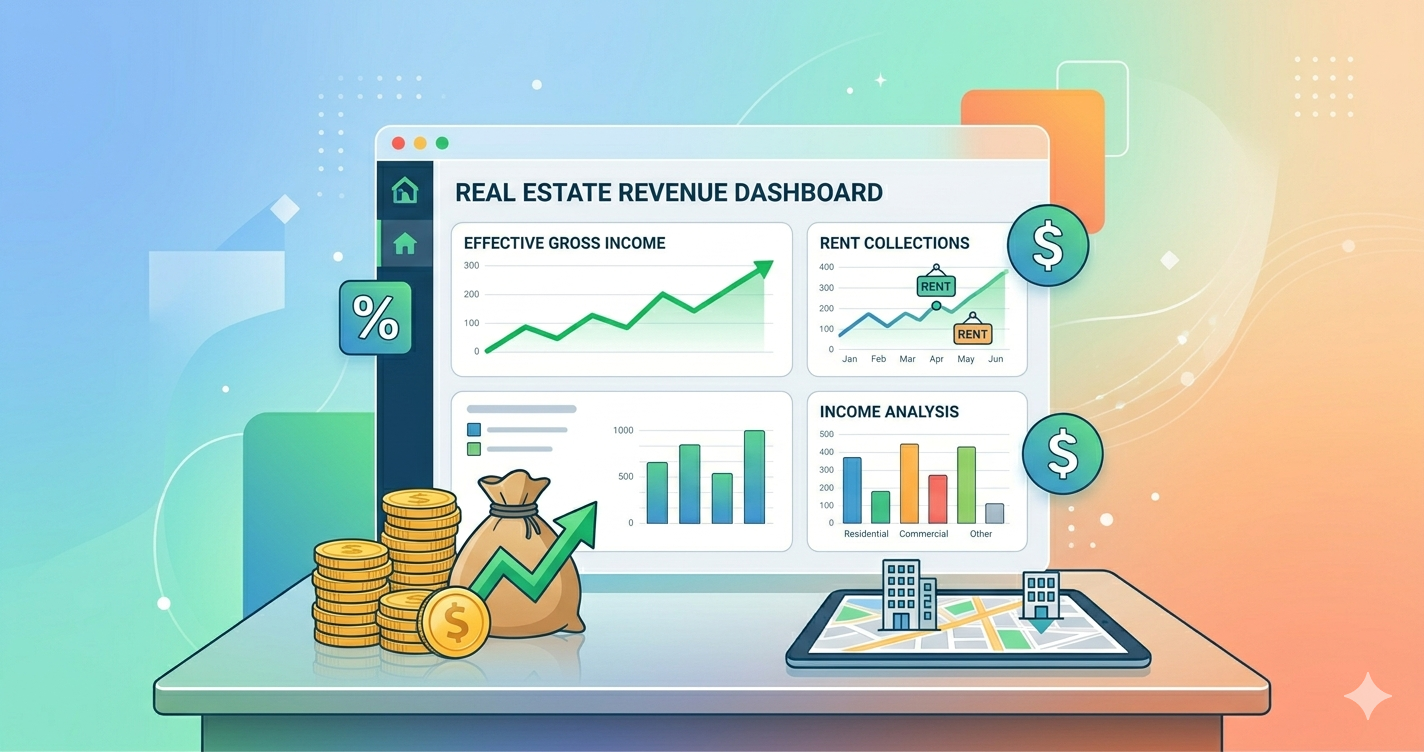
What Is Effective Gross Income (EGI) in Commercial Real Estate?
Understand Effective Gross Income (EGI) in CRE — how it's calculated, why it matters more than PGI, and how vacancy, credit loss, and other income affect your underwriting.